
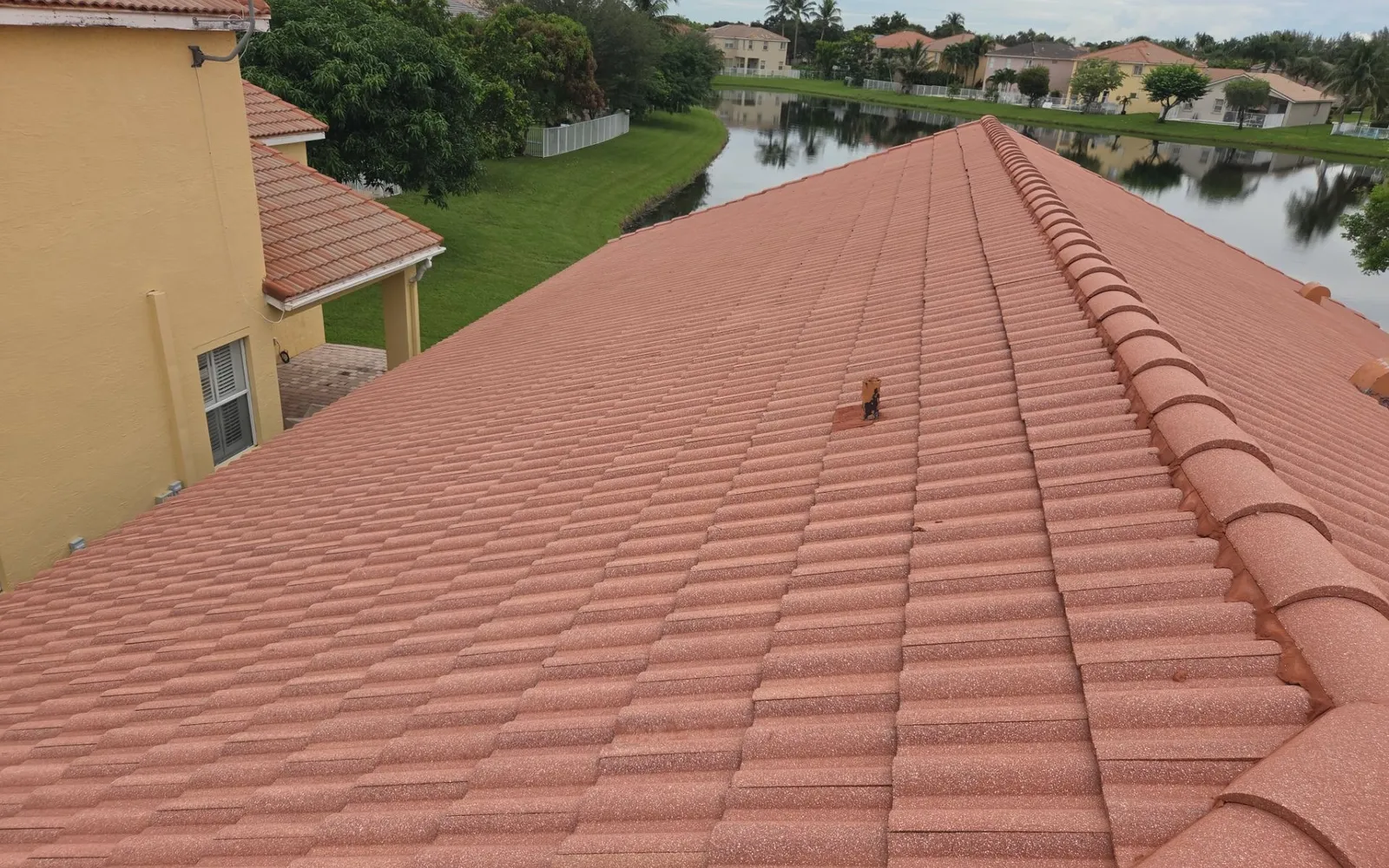
A roof inspection sounds like a vague thing. Someone goes up, looks around, comes down and says it is fine. That is not what we do, and the difference is the whole point of a plan rather than a one-off look.
Here is a visit, start to finish.
Before anyone climbs
The first ten minutes are on the ground. We walk the perimeter and look at the roof edge, the fascia, the gutters, the downspouts and where they discharge, and the walls beneath every roof-to-wall junction for staining. We look at the soffits for signs of water that has found its way in and out again. A surprising amount of what is wrong with a roof shows on the wall below it first.
If you have a property file from a previous visit, we have it open. The point of a second visit is comparison.
On the roof - the surface
Then the roof itself, one plane at a time, in a fixed order so nothing gets skipped. On tile that means cracked, slipped and missing tiles, and the condition of the hip and ridge line. On shingle it means granule loss, lifted tabs, curling and any torn or missing pieces. On metal it is fasteners, seams and sealant. On a flat roof it is the membrane, the seams and anywhere water has been standing.
On the roof - where water concentrates
Then the places that matter more than the field, because this is where roofs actually leak:
- Valleys and crickets - cleared of accessible debris, then inspected, because a valley full of leaves is holding water against the membrane every time it rains.
- Every flashing - wall transitions, step flashing, counter-flashing, and the condition of the stucco or siding above them.
- Every penetration - pipe boots, vents, skylights, satellite mounts, anything that goes through the roof. Each one is a hole that was sealed once.
- The drainage path - that water can actually get from where it lands to where it should leave.
What gets photographed
Everything above, whether it is fine or not. That is deliberate. A photograph of a sound valley this year is what makes a photograph of a failing valley next year mean something. Every photo is date-stamped and tied to a location on the roof map.
What you receive
Within a few days of the visit, three things:
The condition report. A written document, in plain language, organised by area of the roof. For each area: what we saw, whether it needs attention, and how urgently. Findings are ranked - what should be dealt with now, what should be watched, and what is fine. Where a repair is recommended, it comes with a written estimate so you know the number before you decide anything.
The roof map. A simple plan-view drawing of your roof with every finding and every photograph pinned to its location. It is how you can tell someone else - a future roofer, a buyer, an adjuster - exactly where something is without either of you climbing up.
The photographs. All of them, dated, yours to keep. Not a selection of the dramatic ones - the full set, because the ones that show nothing wrong are the baseline.
What a visit is not
It is not a repair. Accessible debris clearing is included and small items are sometimes dealt with on the day, but repair work is scoped and estimated separately, and you approve it before it happens. It is not a warranty on the roof's condition - no honest inspection can be. And it is not a substitute for a licensed inspector's report where one is required; where Storm Ready includes a wind mitigation report, that is arranged through a licensed inspector, not signed by us.
Baseline and Storm Ready
Baseline is one visit a year, scheduled before hurricane season. Storm Ready is two - one before the season and one at year end - so the roof gets looked at after the season has had its go at it, and the two sets of photographs bracket the storms.
Every visit produces the same three things: dated photographs, a written condition report, and a roof map you keep.
Compare the plans