
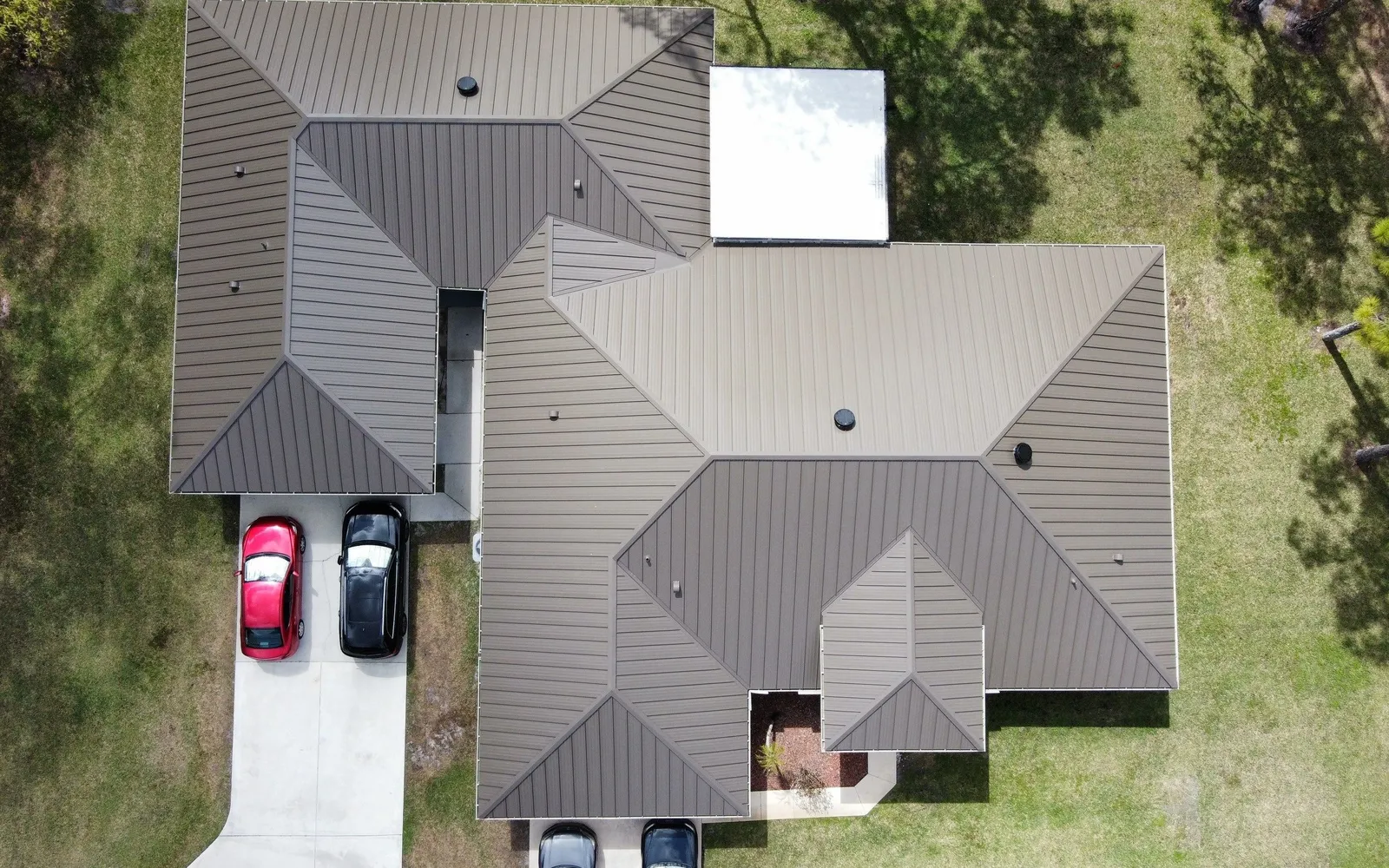
Most roof reports are a list of photographs with captions. Useful, but try telling someone over the phone where the cracked tile is. "Above the guest bathroom, to the left of the second vent, about a third of the way up" is not an address.
What it is
A plan-view drawing of the roof - the outline you would see from directly above - with the slopes, ridges, hips, valleys and every penetration marked. On that drawing, every finding from the inspection gets a numbered pin, and every photograph is tied to a pin. Finding 7 is a lifted tab; pin 7 is on the south slope, near the east hip; photo 7 is what it looks like.
Why it matters more than it sounds
It makes the roof discussable. You, a contractor and an adjuster can all look at the same map and point at the same pin. That is not nothing when the alternative is three people each imagining a different roof.
It makes comparison possible. Next year's map has the same outline and the same pin locations. A pin that was "watch" last year and is "repair" this year is a story in two images.
It makes estimates honest. A repair estimate that references pin 7 is an estimate for a specific thing in a specific place, not for "some flashing work".
It survives you. Sell the house, change contractor, hand it to your kids - the map still means what it meant.
What it is not
It is not a measurement report or a survey. Dimensions are approximate; it is a diagram for locating things, not for ordering material. And it is only as good as the inspection behind it - a map with three pins on a roof that has fifteen problems is worse than no map.
Every Roof Sentry report comes with the map. Every photograph is pinned to it.
Compare the plans