
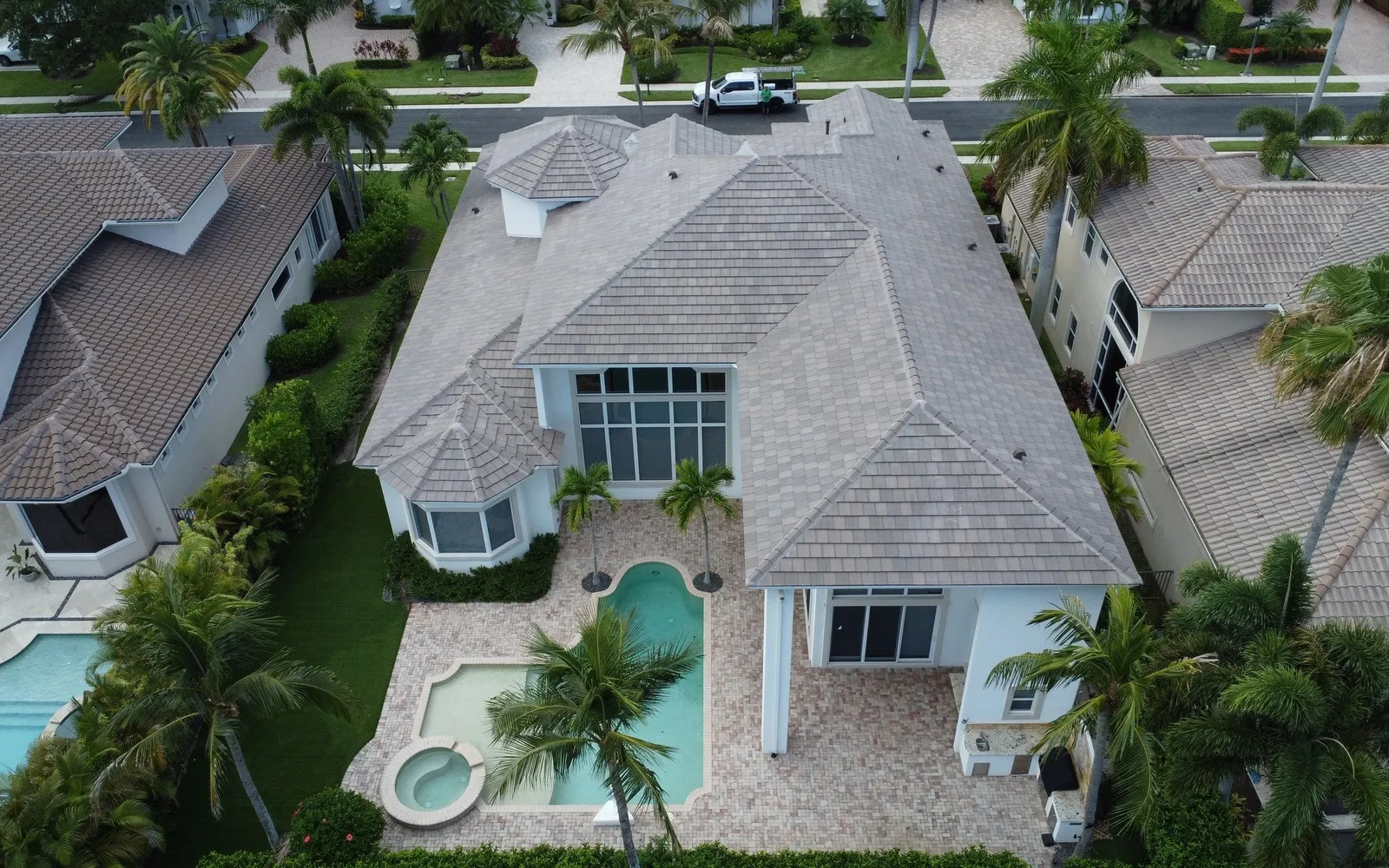
The valley
Where two roof planes meet at an inside angle, the water from both runs into one channel. A valley carries far more water per foot than any other line on the roof, at higher speed, and it is also where wind-blown leaves, fronds and seed pods come to rest. Under the tile in a valley there is valley metal, and under that the underlayment - and both are being asked to handle more water, more often, than anywhere else.
The cricket
Behind a chimney, a wide vent or any obstruction on a slope, water and debris pile up on the uphill side. A cricket is a small, peaked saddle built there to split the flow and send it around the obstruction. No cricket, or a cricket too small, or a cricket full of leaves, and the obstruction becomes a dam.
How they fail
- Debris. A valley full of organic material holds water against the membrane through every rain and slows drainage until water backs up under the tile laps.
- Membrane age. Valleys see the most water, so their underlayment ages fastest.
- Metal. Valley metal corrodes, or was lapped the wrong way, or was never wide enough for the volume.
- Tile cut too tight. Tile that has been cut to sit hard against the valley centre leaves no channel; water runs under the tile instead of down the metal.
What maintenance does here
Clears them. Accessible valley and cricket debris clearing is in both Roof Sentry plans because it is the single most effective thing done on a visit - not glamorous, but it is the difference between a valley draining and a valley soaking. Then the metal and the tile edges are photographed, so the condition of the valley can be tracked year to year.
Accessible valley and cricket clearing is included in every visit, on every plan. It is the part of maintenance that most directly protects the membrane.
Compare the plans