
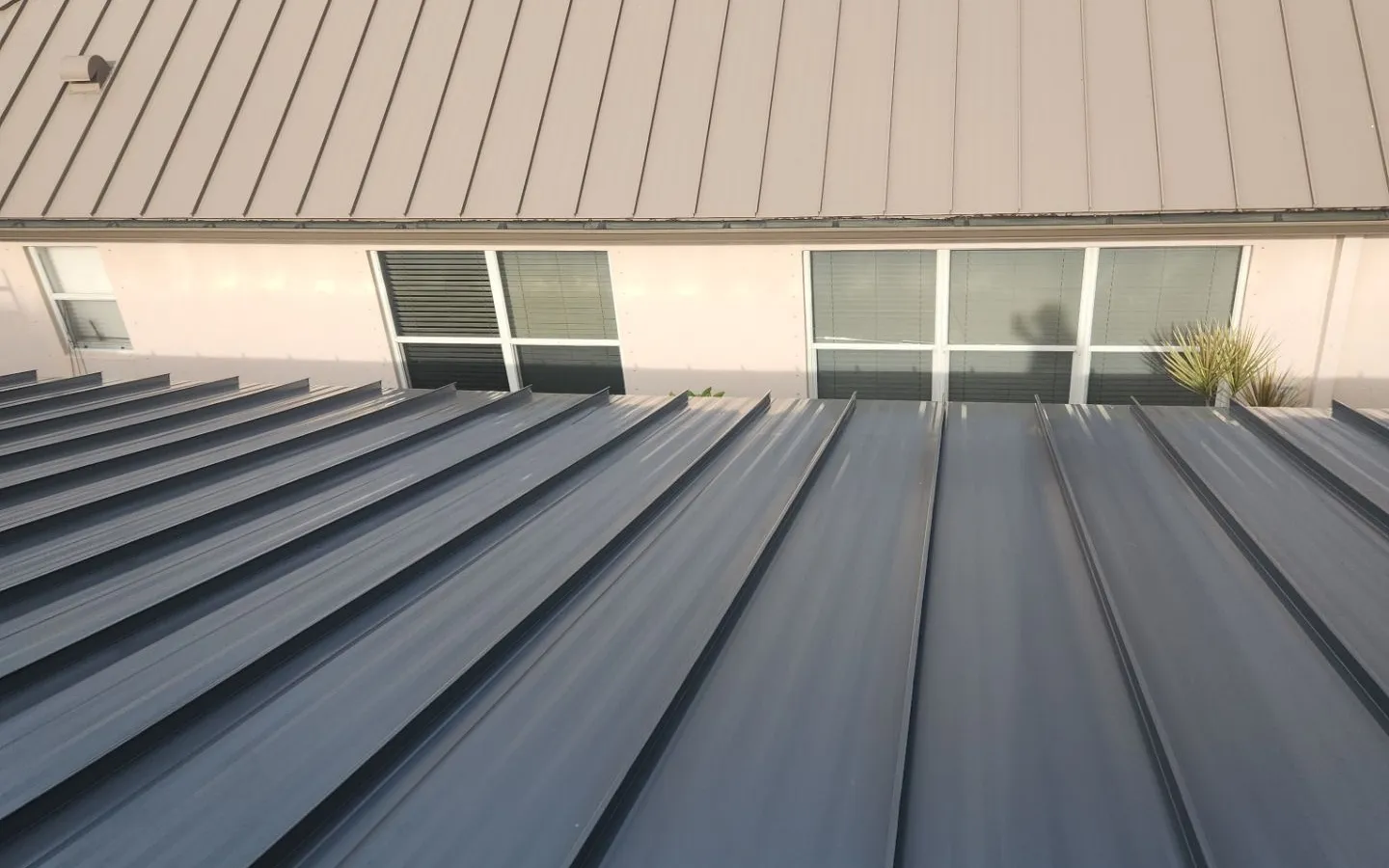
How to tell
Look at the surface. If you can see rows of screw heads across the panels, it is an exposed-fastener roof (sometimes called through-fastened, or by trade names for the panel profile). If the surface is clean panels with raised vertical ribs and no visible screws, it is standing seam, with the fasteners hidden inside the seams.
Exposed fastener
Less expensive to buy and to install. The panels are screwed down through the face, with a sealing washer under every screw head - hundreds or thousands of them on a house. Every one of those is a hole in the roof sealed by a small piece of rubber.
Maintenance is therefore fastener maintenance: checking for backed-out screws, for failed washers, for rust at fastener lines. On an older exposed-fastener roof it is normal to replace washers or fasteners in batches. The panels themselves also move with temperature, and because they are pinned by the screws, that movement works the holes larger over years.
Standing seam
More expensive. The panels are attached with clips or a concealed flange inside the seam, and the seams are either snapped or mechanically locked. No holes through the face of the panel in the field. The panels can also expand and contract along their length without stressing a fastener, because the clips allow movement.
Maintenance is about the seams, the trims and the penetrations - the few places where there are still exposed fasteners or sealant. It is a shorter list and a longer interval between problems.
What that means for you
If you have an exposed-fastener roof, the annual look is not optional; it is how the roof stays a roof. If you have standing seam, the annual look is lighter but the penetrations and trims still need it, and the panel edges on the coast still need it. Both are good roofs. They just need different attention, and knowing which one you own is the start.
One thing they share
Neither should ever be walked carelessly or pressure washed, and neither tolerates dissimilar metals or the wrong fasteners. Any repair on either uses parts made for that profile.
Your condition report names the system you have and sets the checklist to match - fasteners and washers for exposed-fastener, seams and trims for standing seam.
Compare the plans