What a silicone coating is
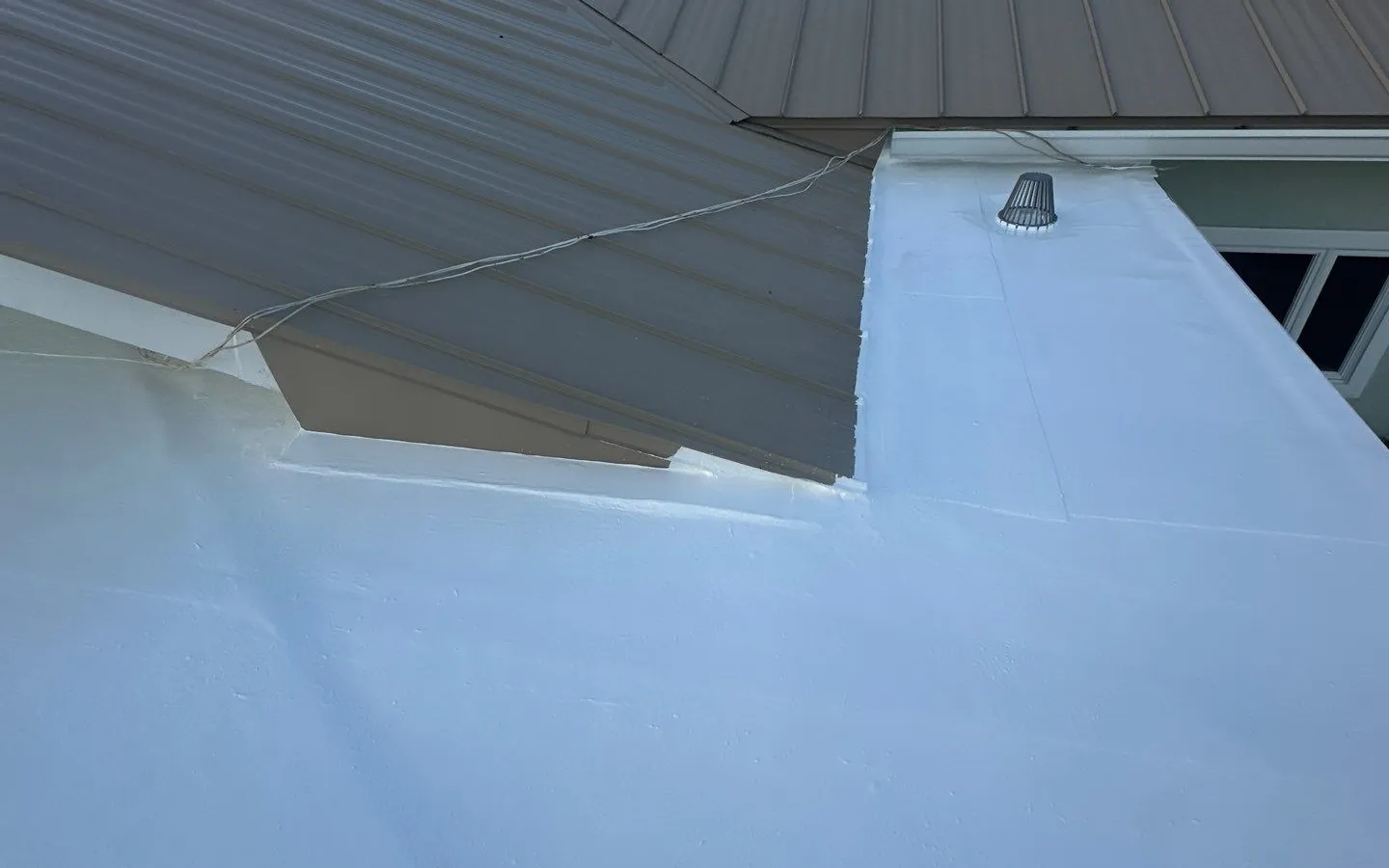
A fluid-applied silicone membrane, rolled or sprayed over an existing low-slope roof, that cures into a seamless, white, UV-stable, waterproof layer. Silicone in particular tolerates standing water, reflects heat, and does not chalk away in sun the way some other coatings do. Applied at the right thickness over a sound substrate, it is a legitimate roofing system with its own warranties.
What it is good at
- Extending a roof that is aged but dry. Old modified bitumen with surface wear, a metal roof with tired seams, a built-up roof losing its gravel - all candidates.
- Ponding areas. Silicone stays waterproof under standing water where acrylics soften.
- Heat. A white silicone roof is markedly cooler than a black one.
- Seams and fasteners on a metal roof, when applied with reinforcement at the details.
What it is not
A coating is not a fix for a wet roof. If the insulation or the deck under the membrane is holding water, coating over it seals the water in. The roof then looks new from above while the deck rots from below, and the coating hides the evidence. This is the single most common misuse of coatings and it is why a coating job that skips the moisture check is a coating job to walk away from.
What has to happen first
- Moisture survey. Infrared, capacitance meter, or core cuts - some method of finding wet areas under the existing membrane, so they can be cut out and replaced before anything goes over them.
- Repairs. Every open seam, failed flashing and loose edge fixed as a repair, not as a place to put more coating.
- Cleaning. The substrate has to be clean and dry for adhesion. This is a low-pressure wash with the right cleaner, followed by drying time.
- Primer where specified. Some substrates need it.
- Reinforcement at details. Fabric or mastic at seams, penetrations, and transitions, before the field coat.
- Thickness. Coatings are specified in mils of dry film, and the warranty depends on hitting the number. It is measured, not eyeballed.
Maintenance afterwards
A coated roof is easy to maintain: keep it clean, keep the drains clear, and check the details annually. Small damage is spot-repaired with the same material. It is one of the more maintenance- friendly systems there is - provided the roof under it was dry on the day it went on.
If a coating is the right answer for your flat roof, the report will say so - and it will say what has to happen underneath first.
Compare the plans