
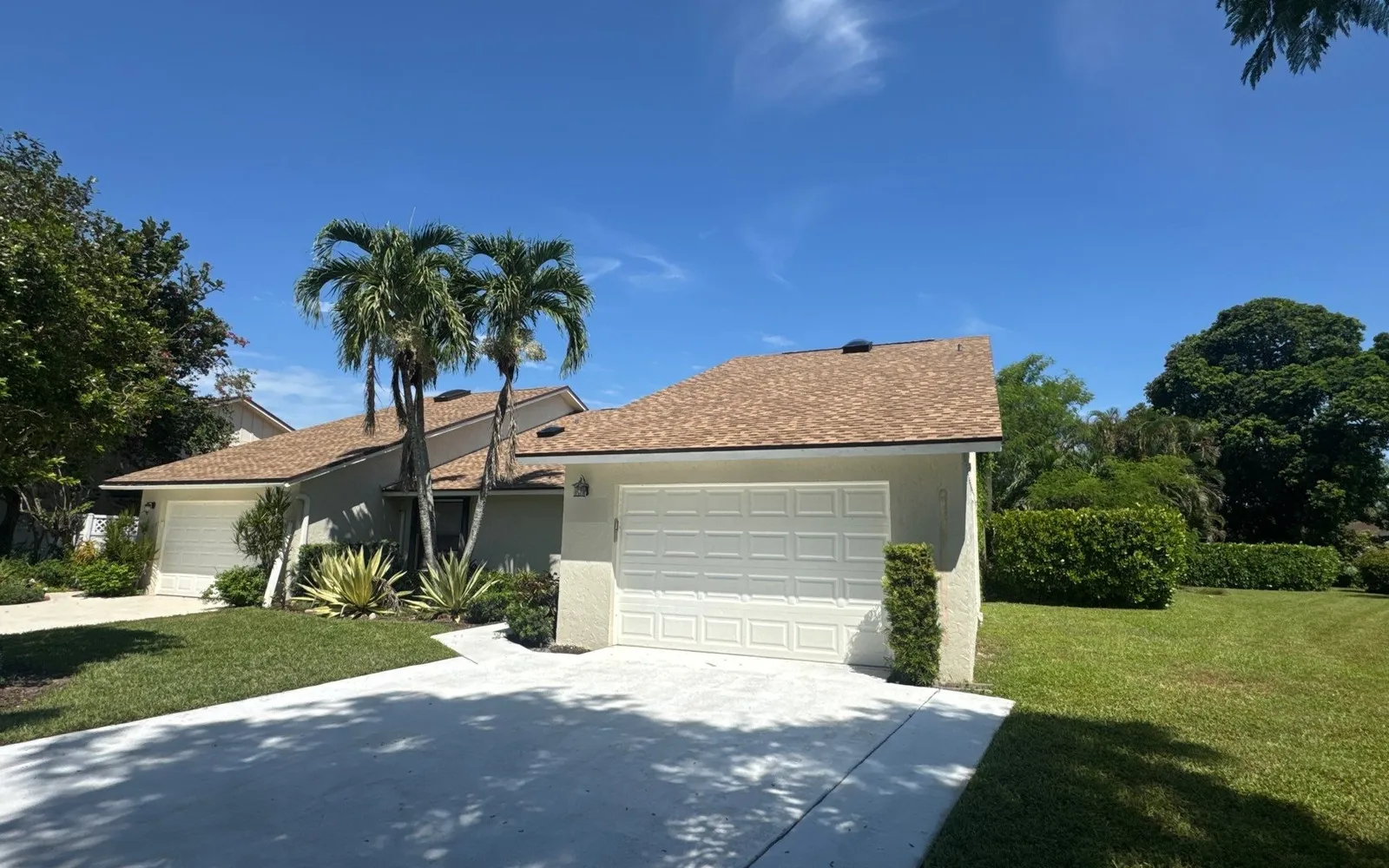
Concrete tile gets most of the attention in Palm Beach County, but a large share of the roofs here are asphalt shingle - and shingle has a different way of ageing. Tile mostly stays looking fine while the membrane underneath quietly gives out. Shingle does the opposite: it shows you. The surface itself is the wear layer, and the surface is on display.
That is useful, provided you know what you are looking at. These are the five things that show up first, in roughly the order they arrive, as we see them on Palm Beach County shingle roofs during maintenance visits.
1. The colour goes - and that is granule loss, not fading
An asphalt shingle is a fibreglass mat soaked in asphalt, with a layer of mineral granules pressed into the top. The granules are not decoration. They are the sunscreen. Asphalt exposed to Florida UV dries out, shrinks and cracks; the granules stand between it and the sun.
Over years the granules wash off - into the gutters, mostly - and the roof pales. Homeowners read this as "fading" and treat it as cosmetic. It is the opposite. The paler the roof, the less protection is left on the asphalt underneath, and the faster everything else on this list arrives.
A new tab set next to old ones shows it plainly: the new one is the colour the roof was on the day it was installed, and the field around it is the same shingle after years of Florida sun.
2. Tabs lift, and then they tear
Every shingle has a factory sealant strip along the underside that bonds it to the course below once the sun warms it. That bond is what keeps a roof on in wind. As the asphalt ages the strip loses its grip, and individual tabs start to lift at the bottom edge.
A lifted tab is not a leak yet. It is a handle for the wind. Gusts get underneath, flex the tab back and forth, and eventually crease or tear it - and a torn tab exposes the nail line of the shingle beneath, which is where water gets in.
Lifted tabs are hard to see from the ground unless the light is low and coming from the side. From the roof they are obvious.
3. Curling and cupping
When the asphalt has dried out enough, shingles stop lying flat. Edges curl upward or the middle cups. This is later-stage wear: it means the material has lost its flexibility, and shingles in this condition tend to crack when walked on or when a tab is lifted to reseal it.
A roof with widespread curling is usually past spot repair and into a replacement conversation. A roof with a few curled tabs on the west or south face - the sides that get the afternoon sun - is a roof telling you which slope to watch.
4. The details go before the field does
Most of a shingle roof is open field, and open field is the easiest part to get right. Leaks start where the field meets something else: a chimney, a wall, a vent, a pipe. Three details account for most of the water we find inside shingle-roofed houses.
The chimney crown. The concrete slab on top of a masonry chimney cracks with heat and age, and once it does, water runs straight down inside the brickwork. The fix is not complicated - it gets cleaned and sealed - but nobody sees a chimney crown from the ground, and they go years without attention.
The cricket. On the uphill side of a chimney, water and debris pile up against the brick unless something diverts them. That something is a cricket - a small peaked saddle built at the base of the chimney. When it is missing, undersized, or full of leaves, the chimney becomes a dam.
Pipe boots. Every plumbing vent through the roof is sealed with a rubber collar, and rubber does not like Florida sun any more than asphalt does. The collar splits, usually on the top edge, and water runs down the pipe into the attic. It is a ten-minute repair and it is the most common leak we are called to on shingle roofs. It is also invisible from the ground.
5. Spot repairs are normal - up to a point
None of the above means a roof is finished. Individual tabs get replaced, boots get swapped, crowns get sealed, and a shingle roof that is looked at every year will typically go a long way on small, cheap interventions.
The judgement call is density. A handful of replaced tabs on a slope is maintenance. When the repairs start to outnumber the original shingles around them, the roof is telling you the field itself has aged out, and the money is better spent on a plan for replacement than on chasing tabs. Photographs from successive years make that call much easier to see - and much easier to explain to whoever is paying for it.
One thing specific to low-slope shingle
Shingle is meant for steeper roofs. Below a certain pitch - and plenty of Florida additions and porch roofs sit right at that line - the code requires a double layer of underlayment beneath it, because water moves too slowly to shed reliably. If you have a low-slope section on a shingle roof and you do not know what is under it, that is worth asking about, because a single layer on a low slope is a leak waiting for a slow rain.
What to do with this
You do not need to climb the roof. You need to know that the roof changes colour before it leaks, that the details fail before the field does, and that most of what goes wrong on a shingle roof is cheap when it is caught in the same year it starts.
Repair work on shingle roofs is scoped and estimated separately - every roof is different and we are not going to guess at yours from a paragraph. What a scheduled visit gives you is the finding, photographed and dated, with a number next to it, before it has had a season to grow.
Both Roof Sentry plans include the surface, drainage and flashing review that catches lifted tabs, split boots and a cracked crown while they are still small repairs - photographed, dated, and written up so you can see year against year.
Compare the plans