
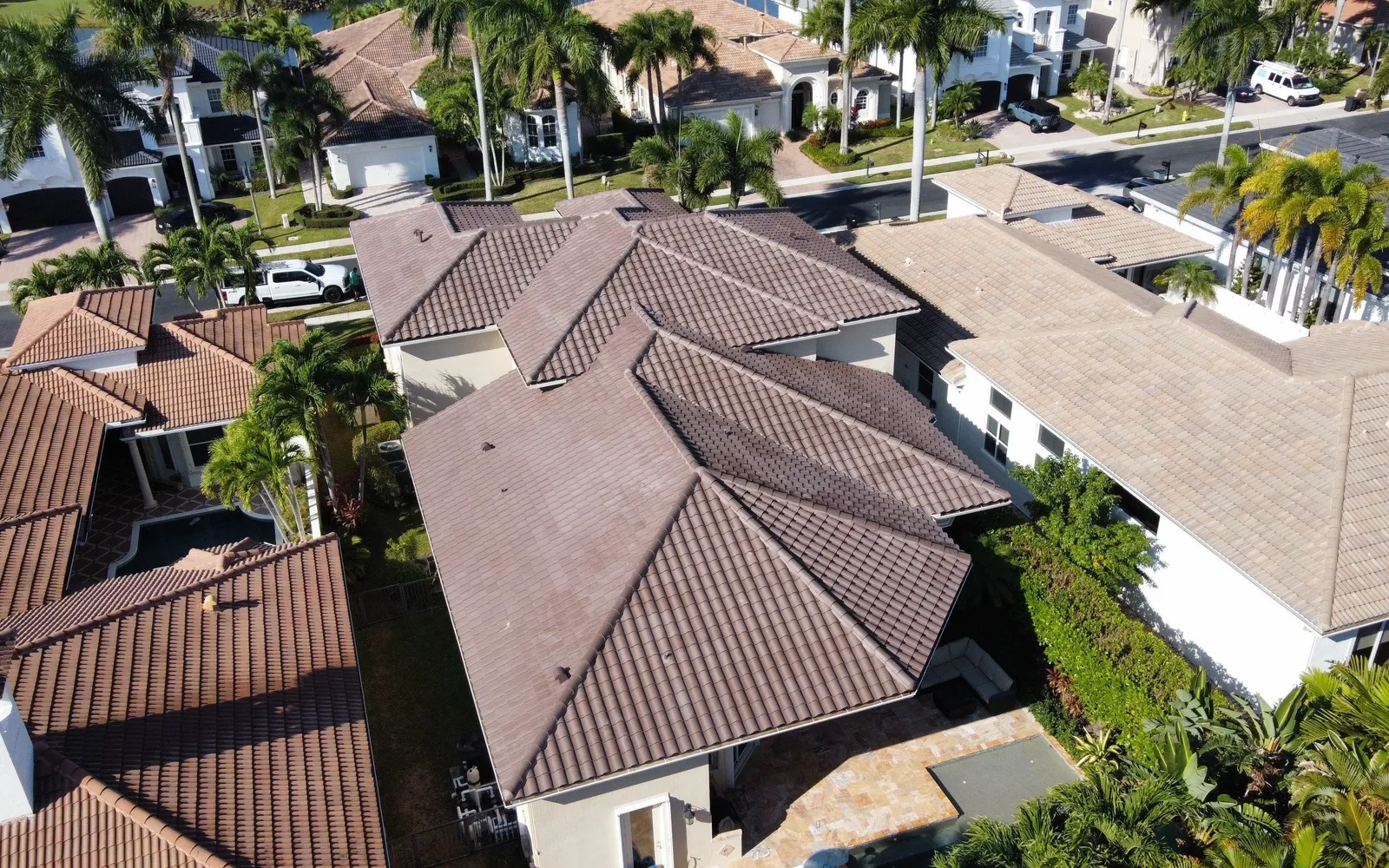
A tile roof covered in black streaks looks neglected, and a pressure washer removes that in an afternoon. The roof looks twenty years younger from the street. It is one of the most satisfying before-and-afters in home maintenance, and it is one of the most expensive mistakes a Florida homeowner can make on a tile roof.
What the wand actually does
Three things, none of them good for a tile roof:
It erodes the tile surface. Concrete tile is not glazed. It has a factory surface, and a colour layer, and a pressure washer at the sort of PSI that removes lichen also removes those. The tile goes back to looking raw, gets more porous, and then holds dirt and growth faster than it did before. The next clean comes sooner and does more damage.
It drives water where water should not go. A tile roof is designed to shed water running downhill under gravity. It is not designed for several thousand PSI directed sideways and upward under the tile lap. Water pushed under the tile lands on the underlayment - the actual waterproofing - and sits there.
It breaks tile, and it breaks it invisibly. Someone has to walk the roof to do the work. Tile cracks underfoot, particularly at the nose and particularly on older roofs. Cracks are often hairline and will not show from the ground, and the tile stays in place looking fine.
Why it matters more on tile than on other systems
On a tile roof the tile is the wear layer and the underlayment beneath it is the waterproofing. Anything that ages the membrane is a real cost, because the membrane is the shorter-lived component and replacing it means lifting the whole roof.
Broken tile compounds the same problem. A missing or cracked tile exposes underlayment directly to UV, and membranes age quickly in direct sun. A cleaning that leaves a dozen hairline-cracked tiles behind has quietly started a dozen small clocks.
What the growth actually is
The black streaking on Florida roofs is generally algae. Lichen is the crusty, raised, grey-green growth that grips the surface. Neither is structurally destroying a concrete tile in the short term - the urgency is mostly cosmetic. That matters, because it means there is no reason to be in a hurry, and therefore no reason to do it aggressively.
Where growth genuinely does matter is debris: organic material collecting in valleys and crickets holds moisture against the membrane and blocks drainage. That is a maintenance issue rather than a cleaning issue, and it is handled by clearing, not by blasting.
The safer approach
Low-pressure cleaning - usually called soft washing - uses a cleaning solution and roughly garden hose pressure, letting chemistry do the work instead of force. Done properly it does not erode the surface, does not drive water under the laps, and involves far less traffic on the tile.
"Done properly" is carrying weight in that sentence. The process matters, the solution matters, the rinse matters, and so does whether whoever is up there understands what they are walking on.
KLR does not perform roof washing in-house. We arrange it through a third-party cleaner we know uses the correct low-pressure process - the same way a wind mitigation report gets arranged through a licensed inspector rather than signed by a roofer. If you would rather organise it yourself, that is completely fine: ask the cleaner what pressure they work at and what they do about broken tile they find. The answers will tell you what you need to know.
One thing to do afterwards
Whoever cleans it, have the roof looked at afterwards. Cleaning is when tile gets broken, and a cracked tile found this month is a tile; found in three years it is an aged patch of underlayment.
Debris clearing in accessible valleys and crickets is included in both Roof Sentry plans - and every visit is photographed, so damage gets caught in the same year it happens.
Compare the plans