
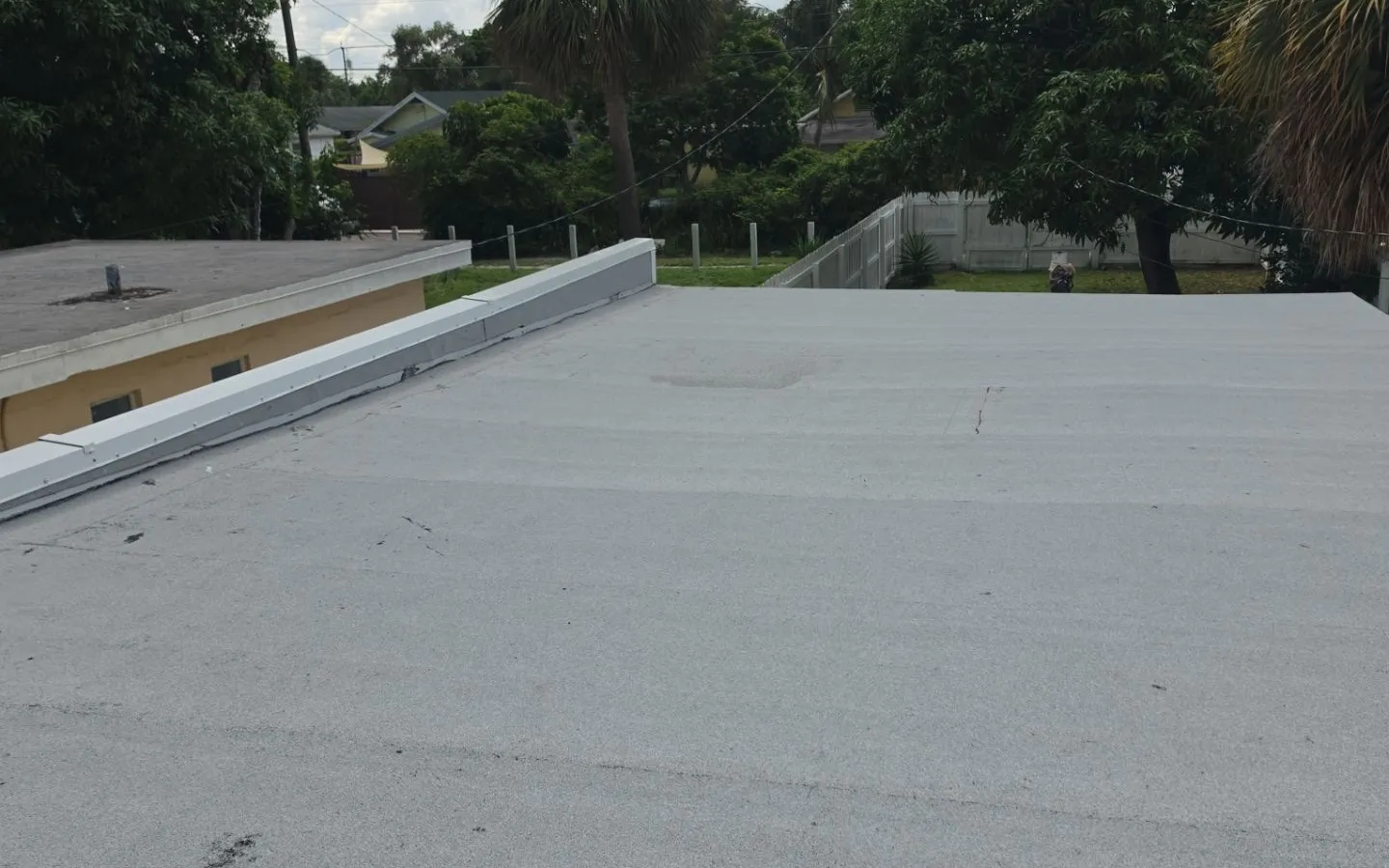
Every flat roof is built with a slight fall so that water moves to a drain, a scupper or an edge. When it stops moving - when it sits in a low spot and stays - that is ponding, and it is the thing that shortens a flat roof's life faster than anything except a bad installation.
How long is too long
The rule of thumb used across the industry is 48 hours. Water still standing two days after the rain stopped is ponding, not drainage. Water that is gone by the next morning is a roof doing its job.
The exact number matters less than the pattern. A roof that ponds in the same spot after every storm has a low spot, and the low spot is where the membrane is being asked to sit in water for weeks of every wet season.
What standing water does
It ages the membrane. Roofing membranes are designed to shed water, not to be submerged. Standing water, warmed by the sun, breaks down the surface faster - on a granulated cap sheet you can often see it as a bare, discoloured patch exactly the shape of the puddle.
It finds every weakness. A seam or a pinhole on a draining roof sees water for minutes. The same flaw under a pond sees it for days, under a head of pressure. Ponds find leaks that would otherwise never have leaked.
It grows things. A pond is a pond. Algae, then debris, then a layer of organic sludge that holds moisture even after the water has evaporated.
It gets heavier. Water weighs a great deal. A large pond deflects the deck slightly, which deepens the low spot, which holds more water. This is slow, but it is the mechanism by which a small pond becomes a large one.
Why it happens
- Blocked drains and scuppers. The most common cause by a distance, and the cheapest to fix. Leaves, a tennis ball, a dead palm frond across the scupper.
- Deflection. The deck has sagged between supports, or a previous repair added weight in one place.
- Insulation settled or wet. Wet insulation compresses, creating a dip.
- Built that way. Not enough slope to begin with, or an addition tied in at the wrong level. Tapered insulation is the usual fix and it is a re-roof conversation, not a maintenance one.
What to look for from the ground
You can often see it without going up: a tide mark on the parapet, a discoloured patch visible from an upstairs window, or - the classic - a drain that never seems to run during a storm while water sheets off the edge somewhere else. Any of those is worth a look from the roof.
What to do
Keep the drains, scuppers and overflows clear. That is genuinely most of it, and it is included in a maintenance visit. Beyond that, ponding is a diagnosis before it is a repair: whether it is a clogged drain or a sagged deck determines whether the fix is ten minutes or a change to the roof, and the only way to tell is to look at where the water is and why.
Repair work on flat roofs is scoped separately. What a visit gives you is the finding - photographed, with the pond outlined on the roof map - so that the conversation about what to do starts from what is actually there.
Drainage review, and clearing of accessible drains and scuppers, is part of every Roof Sentry visit on a flat roof.
Compare the plans