
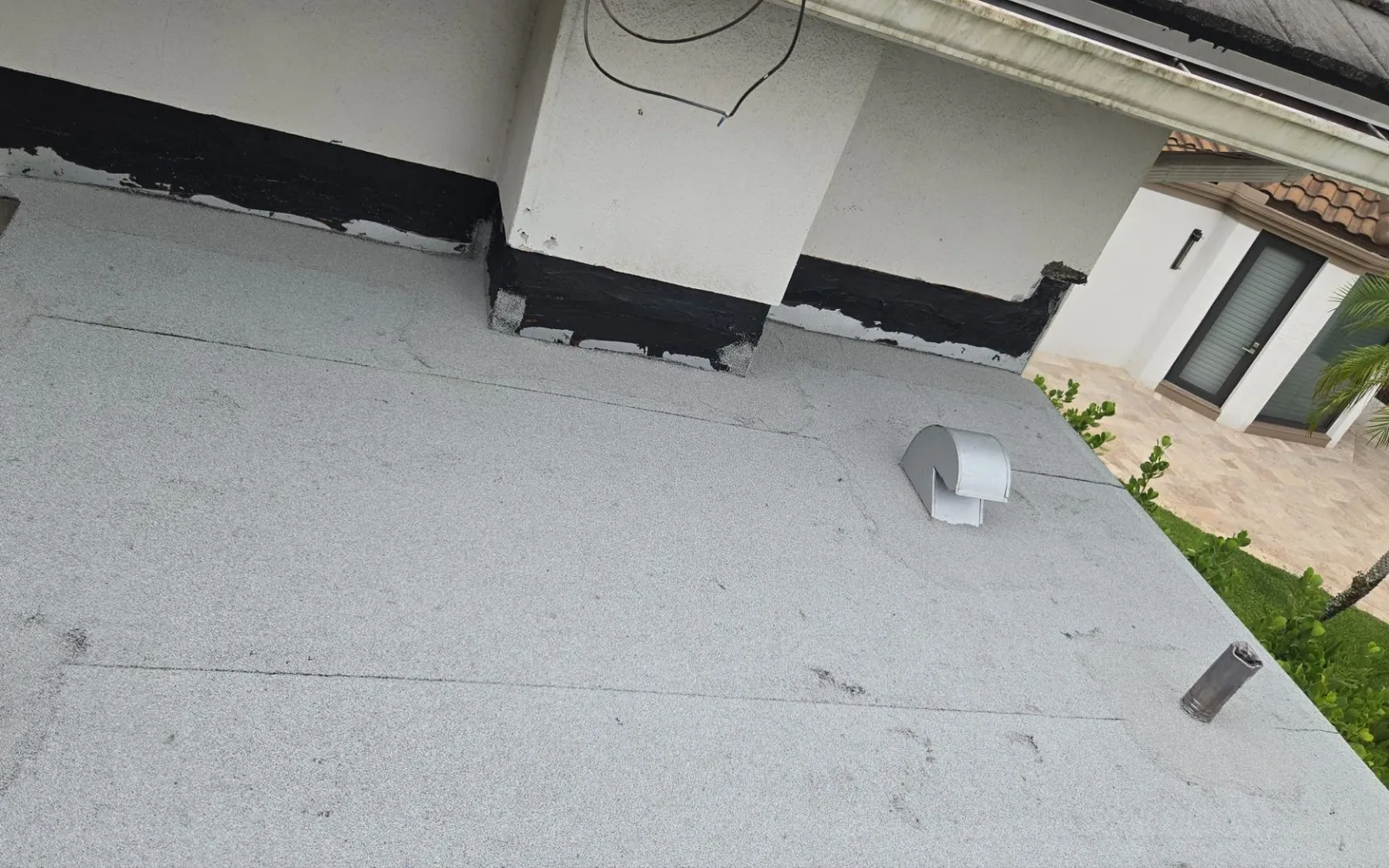
Modified bitumen
What it is: asphalt modified with rubber or plastic polymers, made into rolls, applied in one or more plies by torch, hot asphalt, cold adhesive or self-adhered. Usually has a granulated top surface, often white or light grey. The most common low-slope system on Florida houses - the porch, the addition, the flat section behind the tile.
How to recognise it: a granular surface like a very heavy shingle, in long rolls with visible overlapping seams every few feet.
What to watch: the seams, which are the weak point of any rolled system; granule loss exposing the asphalt; blisters where moisture got between plies; the terminations at edges and walls; and any areas that pond, which age the surface faster.
TPO (single-ply)
What it is: a single layer of thermoplastic sheet - usually white - laid over insulation, either mechanically fastened, fully adhered, or ballasted, with the seams heat-welded together. More common on commercial buildings but increasingly seen on homes.
How to recognise it: a smooth, uniform, usually bright white sheet with welded seams, often with a visible pattern of fastener plates under the membrane.
What to watch: the welds - a weld that did not fuse can look fine and fail years later; punctures from dropped tools or foot traffic; the membrane pulling at fastener plates; shrinkage pulling the sheet away from walls and curbs; and the flashing details, which are factory or field-formed pieces that need their own welds.
Built-up (BUR)
What it is: the traditional "tar and gravel" roof - multiple plies of felt set in hot asphalt, surfaced with gravel embedded in a flood coat. Older houses and some flat-roofed mid-century homes have it.
How to recognise it: a gravel surface. If you can see gravel, it is almost certainly built-up.
What to watch: bare spots where gravel has washed away and the asphalt is exposed; blisters and ridges; alligatoring (a cracked, scaly surface) on exposed asphalt; and the flashings, which on old BUR are often the first thing to go. Gravel also hides damage, so a built-up roof needs a closer look than its surface suggests.
What they share
All three leak at the edges, penetrations, walls and drains before they leak in the field. All three suffer from ponding. All three can be coated if they are sound and dry. And all three need the drains clear and the surface free of debris, which is the part of maintenance that is common to every flat roof and is included in every Roof Sentry visit.
Your condition report names the system and follows the checklist for it - seams on mod bit, welds on TPO, bare spots on BUR.
Compare the plans