The physics, briefly
Metal expands when heated. A long roof panel that goes from a cool morning to a surface temperature well above the air temperature in the afternoon sun grows by a small but real amount along its length - and shrinks back at night. On a short panel this is nothing. On a long panel it is enough to be felt, and it happens every single day.
What it does to an exposed-fastener roof
The panel wants to move. The screws through its face do not. So the panel works against the screws, cycle after cycle, and over years three things happen: the hole around the screw gets slightly larger, the screw slowly backs out, and the washer under the head is stressed and stops sealing. This is why exposed-fastener roofs need their fasteners checked, and why the fasteners furthest from the fixed end of a long panel are usually the first to loosen.
What it does to standing seam
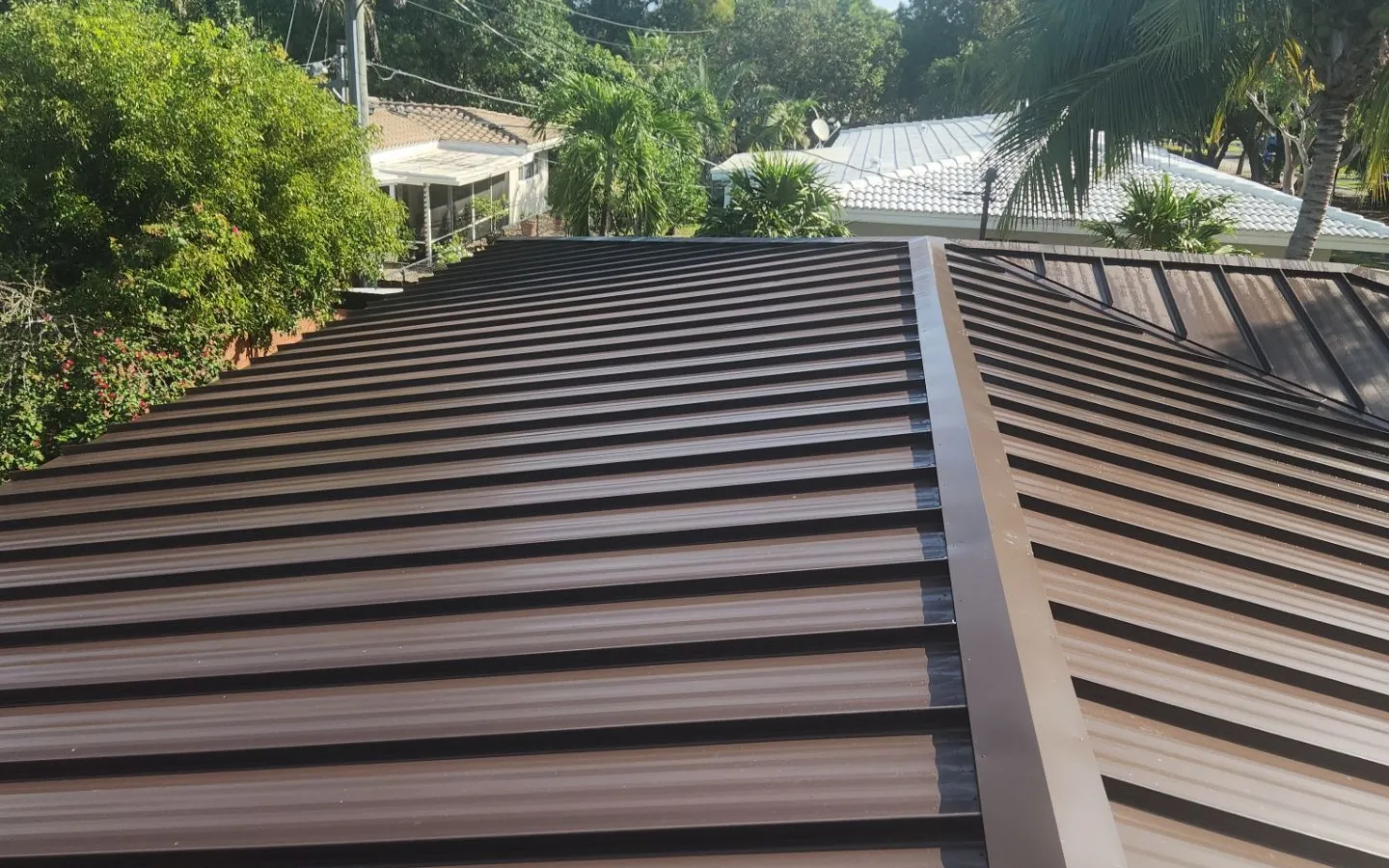
Standing seam is designed for this. The panels hang on clips that allow the panel to slide as it expands, and the seams accommodate the movement. But the panel still has to be fixed somewhere - usually at one end - and the details at the other end have to allow for the travel. Where they do not, you see it at the eave or the ridge: trims that have been pushed out of line, sealant that has sheared, closures that have opened up.
What it does to sealant
Any sealant joint on a metal roof is being stretched and compressed daily. Good sealant is formulated for it and lasts a long time. Old sealant, or the wrong kind, goes hard, loses its flexibility and cracks - which is why "it was sealed a few years ago" is not a reason to skip looking at it.
The noises
If you hear your metal roof tick, pop or creak in the late afternoon or at night, that is thermal movement - the panels sliding against clips or fasteners as they change size. On its own it is normal and not a defect. What it is telling you is that the roof is moving, and moving things need their connections checked.
What to look for
- Screws standing proud of the panel surface, or with visible rust trails below.
- Oil-canning - a wavy, rippled look in flat areas of the panel - which is cosmetic but tells you the panel is under stress.
- Trims and closures out of line at panel ends.
- Sealant joints that have opened.
Fastener condition and end details are photographed on every visit on a metal roof, so movement shows up as a trend you can act on rather than a leak you discover.
Compare the plans