
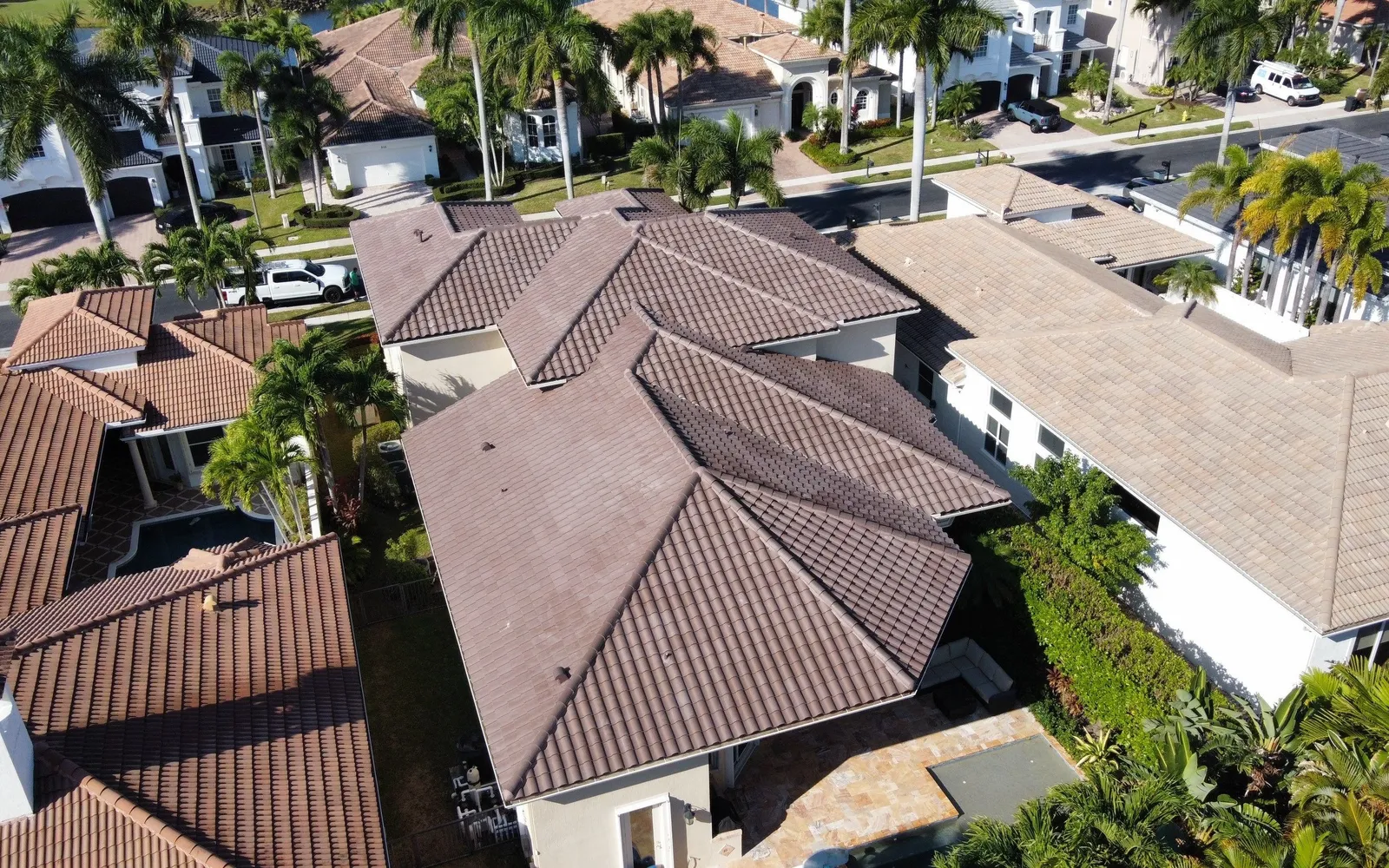
What is up there
Along every hip and ridge, the field tile stops and a row of cap tiles covers the joint. Those caps are held with mortar, with a proprietary adhesive, or with a mechanical ridge system, depending on the age of the roof and how it was built. Under them, on a properly built roof, there is a weather-blocking detail so that wind-driven rain cannot get under the caps.
Why it fails first
Exposure. The ridge is the highest, most exposed line on the house. It gets sun from both sides and wind from every direction.
Movement. The roof expands and contracts daily. Mortar does not. Over years, hairline cracks open along the mortar line, then pieces of mortar loosen and drop, then the cap tiles they were holding start to move.
Hand work. The field is laid in long, regular runs. The hips and ridges are cut, fitted and pointed by hand, and hand work varies.
What to look for
- Mortar with visible cracks, or gaps where mortar has fallen out - often visible as pale fragments in the valley or gutter below.
- Cap tiles that sit unevenly, rock, or have shifted so the overlap is no longer consistent.
- Missing caps, especially at the ends of hips where the last tile takes the most wind.
- Daylight or debris visible under a cap.
What it leads to
A loose cap in high wind becomes a missing cap, and a missing cap exposes the ridge line to driven rain. Water under the caps runs down the hip along the top of the field tile, finds the underlayment, and follows it - which is how a ridge problem shows up as a leak in a room that is nowhere near the ridge.
The repair
Re-pointing cracked mortar, resetting loose caps, replacing missing ones. Routine when it is a few feet; a larger job when the whole ridge line has let go. Which of those you get depends almost entirely on when it was noticed.
The hip and ridge lines are photographed on every visit. A cracked mortar line noted this year is a re-point; the same line three years later is a rebuild.
Compare the plans