
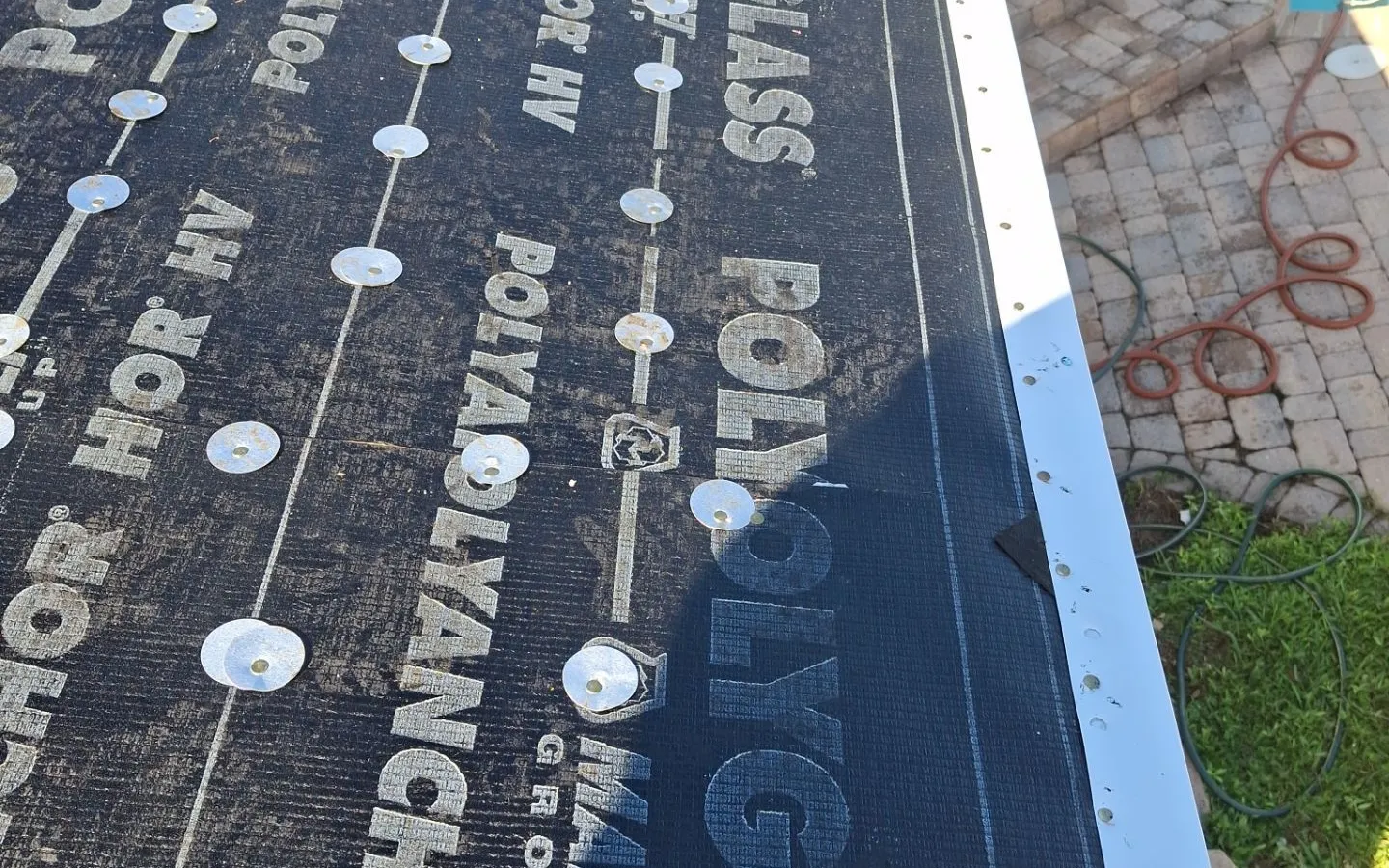
Two ways to hold a tile down
Historically, tile was hung on horizontal wood battens nailed to the deck, or nailed directly through the tile. In Florida, and particularly for concrete tile on re-roofs, the common method now is foam adhesive: each tile is set in a measured bead of polyurethane foam that bonds it to the underlayment below.
Why foam
No holes in the waterproofing. Nailing through tile means nailing through the membrane, thousands of times. Foam holds the tile without putting a single hole in the thing that is keeping the water out.
No battens to rot. Wood battens sit in the same hot, sometimes damp gap as the underlayment. Foam eliminates them.
Wind resistance. Foam-set tile systems carry Florida product approvals for the high-wind design pressures that apply here. Palm Beach County is outside the High-Velocity Hurricane Zone - that is Broward and Miami-Dade - but it is still a high-wind region, and tile attachment is designed and approved to the wind speed for the site.
What it looks like when done well
A consistent bead of foam under each tile, in the pattern the approval calls for, with the tile set while the foam is active so it bonds properly. It is not visible once the roof is finished, which is exactly why the inspection during installation matters.
What it means for maintenance
A foam-set tile that cracks is replaced in foam - the broken piece comes out, the membrane is checked, the new tile is set the same way. A foam-set tile that has slipped has usually done so because the foam bond failed or the tile broke behind it; either way it is a reset, not a re-nail.
One thing foam does not change: the underlayment is still the waterproofing, and it still has a shorter life than the tile. Foam holds the tile on. It does not make the membrane last longer.
If you do not know how your tile is attached, the answer is usually visible on your permit paperwork - and it is one of the things noted in a Roof Sentry condition report.
Compare the plans