
A storm is a bad afternoon. The sun is roughly three hundred days a year of ultraviolet and surface temperatures well above the air temperature, and it is the reason roofing materials in Florida age faster than the same products a thousand miles north.
What UV does, by material
Asphalt. Shingles and modified-bitumen flat roofs are asphalt. UV dries the oils out of it; it goes brittle, shrinks, and cracks. The mineral granules on the surface exist to block UV, and once they are gone the asphalt beneath ages quickly. On a shingle roof the colour change you call "fading" is the sunscreen wearing off.
Rubber and sealants. Pipe-boot collars, fastener washers, sealant beads. All of them are elastomers, and elastomers in UV lose their flexibility and split. This is why the small details fail before the big surfaces do.
Underlayment. Meant to live in the dark under tile or shingle. Anywhere it is exposed - a missing tile, a torn shingle - it ages on the fast clock.
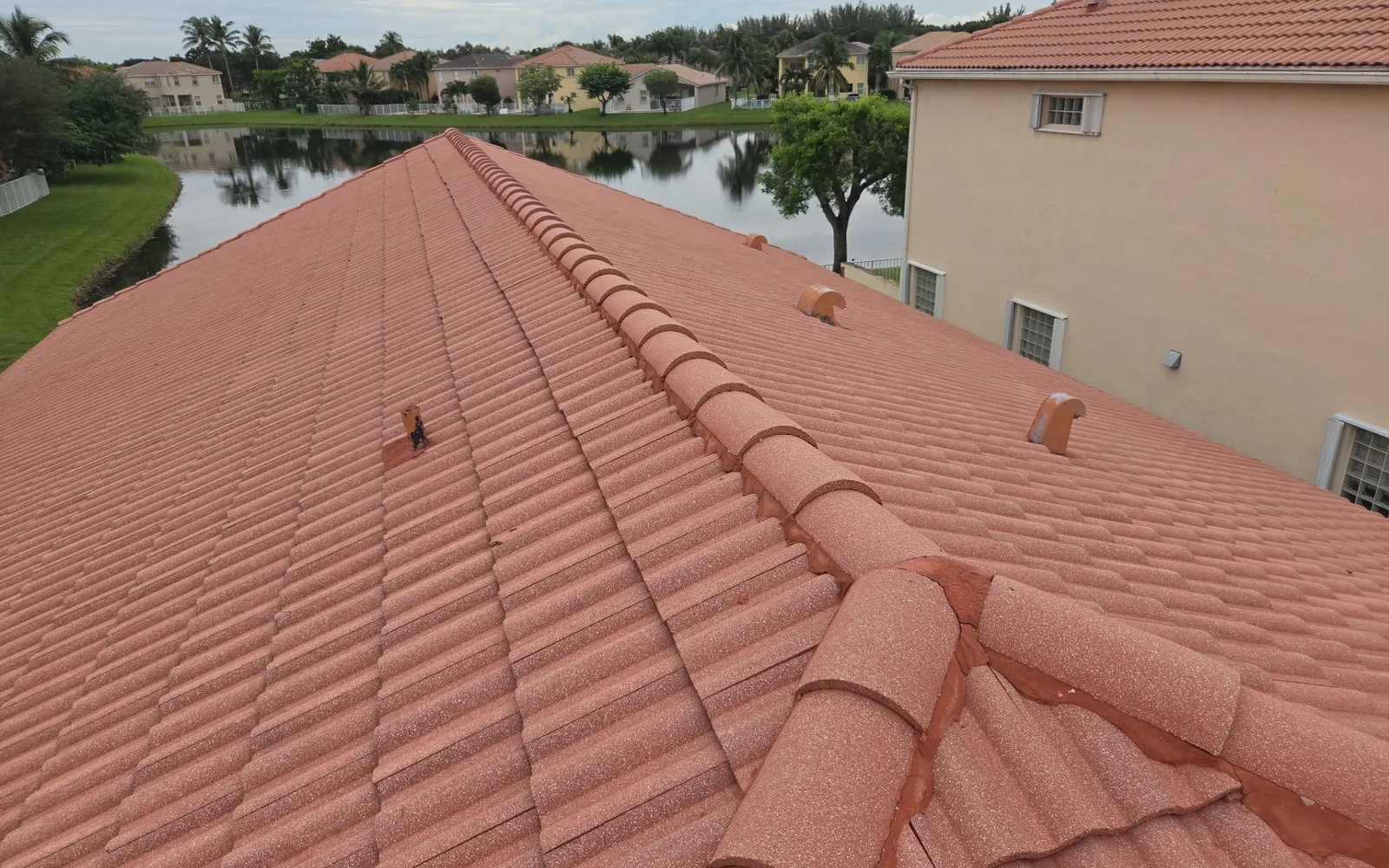
Concrete and clay tile. The material that shrugs the sun off best. The surface colour weathers; the tile does not care much.
Metal. The coating is the UV shield, and it is good. Scratches and cut edges are where the shield is not.
Which slope goes first
South and west. The south face gets the most hours of sun; the west face gets the hottest ones. If a roof has a slope that is visibly further along than the others, it is almost always one of those two, and it is the slope to watch on every visit.
Heat, separately from light
A dark roof surface in July is far hotter than the air. Everything expands. Overnight it contracts. That daily cycle works fasteners loose, opens seams, and fatigues every joint on the roof a fraction at a time. It is slow, it is relentless, and it is why "nothing has changed" between two annual visits is worth a photograph anyway.
Roof Sentry visits are scheduled before the season, which is also the end of the hottest stretch of the year - the right moment to see what the sun has done.
Compare the plans