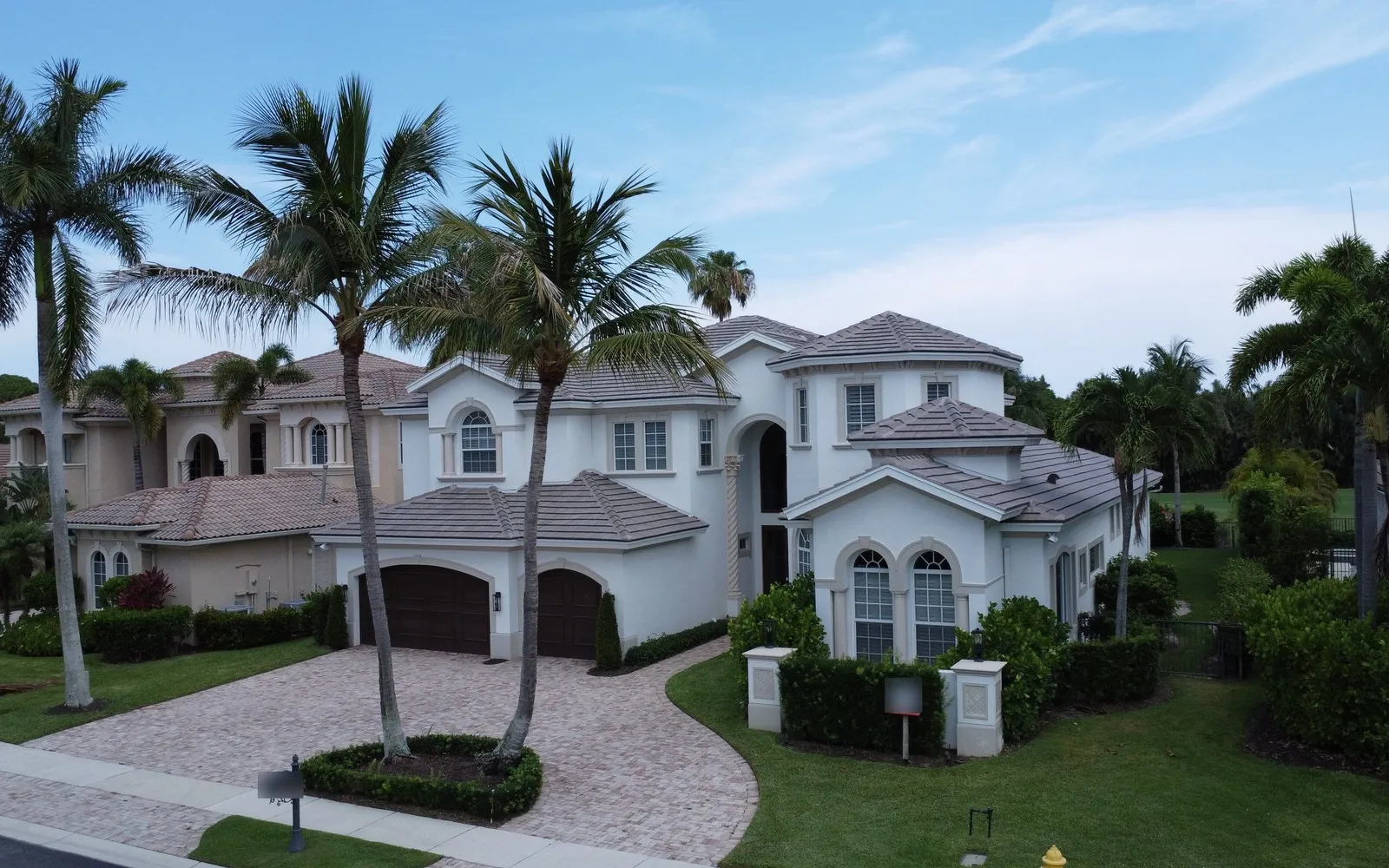
Almost every roof in Palm Beach County older than a few years has them: dark streaks running down the slope, heavier on the north side and under trees, that get worse every wet season and never rinse off in the rain. Homeowners call it dirt, or mildew, or staining. It is none of those exactly.
What it is
The streaking is an algae - a hardy, airborne one that lands on the roof, takes hold in the granules of a shingle or the surface of a tile, and feeds on moisture and the minerals in the roofing material itself. It has a dark protective outer layer, which is why it reads as black, and it spreads downhill with the water, which is why it streaks.
Two other things get lumped in with it. Lichen is the crusty, raised, grey-green growth that grips the surface hard and is much more stubborn. Moss is the soft green cushion that shows up in permanently shaded, damp spots. All three like the same conditions: shade, moisture, and a surface that holds a little water.
Does it matter?
Mostly, no - and it is worth being honest about that, because a lot of roof cleaning gets sold on fear.
On concrete tile, algae is cosmetic in any reasonable timeframe. On shingle, it is arguable that heavy growth holds moisture against the granules and shortens their life somewhat, but the sun is doing far more damage to a shingle roof than the algae is. Lichen and moss are more of a concern because they hold real water and lichen physically grips the surface; when it is removed it can take granules with it.
What genuinely matters is debris - leaves and organic material sitting in valleys and crickets, holding water against the membrane and blocking drainage. That is a maintenance problem rather than a cleaning problem, and it gets dealt with by clearing, not by washing.
What not to do
Do not pressure wash it. It works, cosmetically, and it strips the surface off a tile, drives water under the laps, and breaks tile underfoot. We have written about this separately because it is the single most expensive mistake a tile-roof owner can make with good intentions.
Do not stand on a ladder with a garden sprayer full of bleach. The chemistry is roughly right; the method is how people fall off roofs, and undiluted runoff kills the landscaping below.
What to do
If it bothers you, low-pressure cleaning - soft washing - is the right approach: a cleaning solution applied at roughly garden-hose pressure, allowed to work, then rinsed. Done properly it does not erode the surface or force water where it should not go.
KLR does not wash roofs in-house. We arrange it through a third-party cleaner we know uses the correct low-pressure process, the same way a wind mitigation report gets arranged through a licensed inspector. If you would rather find your own, ask two questions: what pressure do you work at, and what do you do when you find a broken tile. The answers tell you what you need to know.
And whoever cleans it, have the roof looked at afterwards. Cleaning is when tile gets cracked, and a crack found this month is a tile; found in three years it is a patch of aged underlayment.
Accessible valley and cricket debris clearing - the part of this that actually protects the roof - is included in both Roof Sentry plans.
Compare the plans